


How to punctuate dialogue in memoir – part two

I promised at the end of my last blog post (How to punctuate dialogue in memoir – part one) that we’d go into more detail about how to punctuate dialogue in memoir: the nuances, caveats, and rules you can break.
If you haven’t read part one, you really need to go and do that first. That covers the basics of dialogue principles and the following common sentence structures in dialogue:
- A full sentence in one line of dialogue
- A sentence in dialogue that in ends in an exclamation mark or question mark
- A sentence in dialogue split by a dialogue tag
- A speaker needing more than one sentence, split by a dialogue tag
- A sentence in dialogue that uses an action beat instead of a dialogue tag
- A sentence in dialogue with simultaneous action
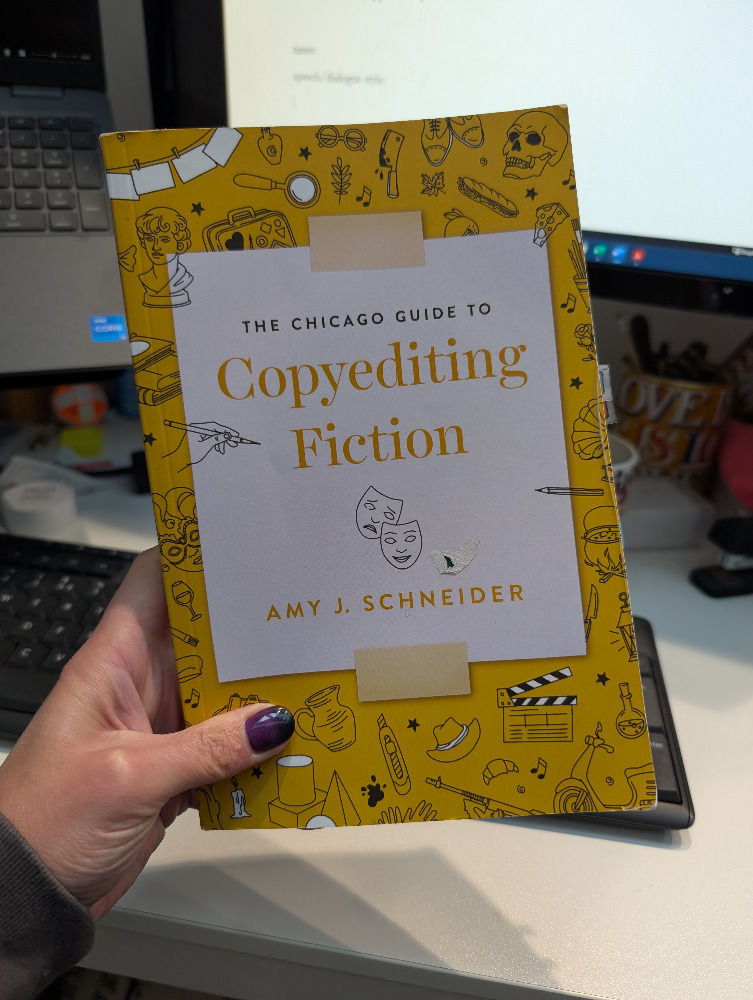
As Amy Schneider puts it, part two of how to punctuate dialogue in memoir is how you become a dialogue rock star (but, as always, if all this becomes too confusing, then that’s what editors and proofreaders are for: it’s more important you get the words and feelings on the page than the right punctuation).
I follow Amy Schneider’s approach and guidelines, so other editors may have their own style points or approaches for punctuating dialogue, including how I’ve termed different examples. This post is aimed at self-publishing authors who are self-editing their memoir or other narrative non-fiction, where some guidance with making decisions can help keep things consistent!
Part 2 of how to punctuate dialogue in memoir is going to cover:
- Trailing dialogue, or dialogue with pauses
- Interrupted dialogue
- Combining dialogue tags with action
- Stuttered dialogue
- Unspoken dialogue
- Reported or described dialogue or speech
- When you don’t need a new line for speech
The key with these more nuanced examples is to only use them as necessary, which may well mean you don’t use them at all!
Trailing dialogue, or dialogue with pauses
Even the most fluent of speakers loses their trail of thought at some point. The best punctuation to show this is an ellipsis (those three full stops …)
Pop them at the end when the sentence has trailed off entirely:
‘I was only thinking …’ she said.
And put them in the middle if speech trails off and then picks back up again
‘I was only thinking … Maybe it’s not their fault after all,’ she said.
Use a capital letter after an ellipsis in the middle of speech if a new sentence has started, otherwise do not capitalize the next word.
‘Yes … no … I don’t know!’ she exclaimed.
‘Maybe you could … Maybe you could ask him,’ she suggested.
Interrupted dialogue
Oh, is there anything worse than being interrup— (Ha ha! See what I did there?)
Use a dash to show interrupted dialogue. Generally speaking, a longer dash is used (called an em dash —), but some publishers prefer a shorter dash (the en dash –). You know what I’ll say here if you’re self-editing: choose one and be consistent!
Whichever dash you choose, it goes straight after the final letter within the interrupted word, no spaces.
‘I’ll tell you what I thi—’
‘Let me stop you right there,’ he said.
If interrupted dialogue continues, use a capital letter if the interruption results in a new sentence, with no dash at the start of that new sentence. Do not capitalize if the original speaker carries on (or has tried to carry on) through the interruption.
Speaker starts new sentence on account of being interrupted:
‘I’ll tell you what I thi—’
‘Let me stop you right there,’ he said.
‘You will not stop me right there. You don’t care about anyone but yourself!’ she said.
Speaker carries on speaking:
‘I’ll tell you what I thi—’
‘Let me stop you right there,’ he said.
‘—you don’t care about anyone but yourself!’ she said.
If a speech is interrupted by simultaneous action, we still use dashes.
‘This’—she pursed her lips—‘is just not good enough.’
You can also interrupt a speaker with action, followed by dialogue from a different speaker (yes, this is getting complicated, but this does happen!).
‘We have to be really quiet now—’
There was a clatter on the floor.
‘Sorry!’ Nancy whispered. ‘I dropped my torch!’
Combining dialogue tags with action
What I mean here, is when speech ends with a dialogue tag (he said, she asked, etc.) and that character also immediately does something ‘the action’.
‘I don’t care,’ Sophie said, and wiped her eyes.
You can omit the comma after said (Sophie said and wiped her eyes), but I think the comma is needed to separate the two.
Stuttered dialogue
As a mum with children with stammers, a brother with a stammer, and a dad with a stammer, I want to reiterate my opening point about only including this where necessary, and also not using it in a reductive sense (i.e. someone who stammers isn’t necessarily a nervous type).
The best punctuation to use for these repeated sounds are hyphens, using both letters for combined letter sounds. When letters and combined letters are repeated at the start of the sentence, only use a capital letter at the start of the sentence, except for proper nouns.
‘Wh-wh-where are you going?’ she asked.
‘I d-d-don’t know what you mean,’ she said.
‘Have you seen Ph-Ph-Ph-Phil anywhere?’ she asked.

Unspoken dialogue
Unspoken dialogue mainly involves thoughts, but it can also include imagined speech and remembered dialogue.
I generally prefer using italics for indicating direct thought, but you can use speech marks instead (you don’t need to use speech marks with italics when indicating thought).
Direct thought is when someone has a thought:
What could it all mean? I thought.
Indirect thought is when someone tells you about a thought they’ve had:
I wondered what it could all mean.
(Note, no italics, and no punctuation after ‘I wondered’.)
Imagined dialogue:
I thought about what he might say to me when we finally met. I can’t believe it’s taken this to long to meet! or something like that.
(Note, ‘or’ is not capitalized because the words in italics are what’s imagined.)
Remembered dialogue:
I had 5 kilometres to go. Just a parkrun! as Millie would say.
(Note, you could also have this in speech marks and non-italics, as long as it’s used consistently. And you don’t need a new line for Millie as this is all in the narrator’s head.)
Reported dialogue or speech
I love spotting and amending reported dialogue or speech that’s been punctuated as if it’s direct dialogue or speech.
Reported dialogue or speech is like quoting something, rather than giving us the dialogue in the moment. As always, examples are probably best for this.
She came into the room shouting ‘Run! Run for lives!’
I wish I could just hear him say I love you one last time.
Frantic now, my voice could only manage a squeaky ‘We’ve got to try’ as I shook the door handle.
I could just about make out the sign said ‘Closed for lunch’.
Note how in all of these the reported speech uses a capital letter, but the only punctuation is for exclamation or questions within the speech marks, there’s no introductory comma.
When you don’t need a new line for speech
This is one of the dialogue rules you’re going to feel especially naughty for breaking, and one that I feel shows up more in memoir than fiction.
When in doubt, use a new line for new speaker and new dialogue, but if someone is already being spoken of or referred to and then they go on to say something, you can keep that dialogue on the same line.
- The librarian came towards me, encumbered by a huge stack of books, slamming them down on my desk. ‘Here you are! I found them all,’ she said, unable to stop a huge smile spreading across her face.
The best way to think about this is how what they’re saying is utterance is interrupting some action (the opposite of when an action beat interrupts dialogue). In a way, this is easy to punctuate because you just follow the standard rules of punctuating sentences and punctuating dialogue, just without the new line.
Another way to look at this that a new speaker needs a new paragraph. In my example, only the librarian is taking any action and saying anything, so I think it flows well to have her speech on the same line as her action.
A handy summary of punctuating tricker dialogue
- ‘This is an example of trailing speech …’ she mumbled.
- ‘This is an example of interrupted spee—’
‘Ha ha! I love interrupting speech,’ he said.
- ‘Here’s how you can combine a dialogue,’ Sophie said, with an action.
- ‘Th-th-this is how you can show someone stuttering,’ she said.
- How do I show what I’m thinking? I thought.
- I wondered how I could show what I’m thinking.
- She would run up to me saying ‘This is how you punctuate reported speech. You don’t need an introductory comma like you do with standard dialogue.’
- If I’m the only person taking part in the action of a paragraph, you can keep my dialogue on the same line. ‘I can’t help but be the centre of attention and have a whole paragraph to myself,’ I said.*
*This, I think, is the trickiest one to get right, so if you’re not sure, stick any new dialogue on a new line.
Nailing punctuation in the dialogue in your memoir creates less confusion for your reader, so they can get swept away by the dialogue, and not get distracted by thoughts like Wait, who’s saying this again? If you’re self-publishing without using a copyeditor or proofreader, it’s well worth familiarising yourself with this. And if you are using a copyeditor or proofreader and your memoir has decent chunks of dialogue, giving it a thorough self-edit will mean less work for your copyeditor or proofreader, which means a lower fee for you, hurrah!
Be sure to check out my other posts that help with self-editing your memoir, including part 1 to punctuating dialogue https://www.siansmitheditorial.co.uk/post/how-to-punctuate-dialogue-in-memoir-part-one and how to write numbers in non-fiction and memoir https://www.siansmitheditorial.co.uk/post/how-to-write-numbers-in-non-fiction-and-memoir Use the memoir writing tag on my blog homepage to find more! And let me know if there are any other topics for memoir writing and self-editing you want me to cover in future.


Comments